Building Biomimetic Robots in Middle School by Aligning STEM Practices
Debra Bernstein, Gillian Puttick
Bernstein, D., Puttick, G. Building Biomimetic Robots in Middle School by Aligning STEM Practices. J Sci Educ Technol (2026).
Abstract
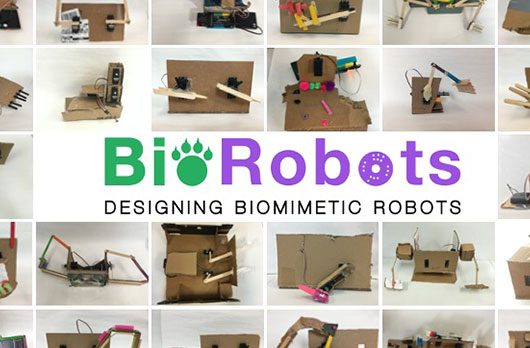
The BioRobots curriculum uses biomimetic robot design as a natural context to integrate science, engineering, and computational thinking (CT). During 21 class sessions, students research structure-function relationships in digging animals, and design, build, and program a prototype search and rescue robot. The paper examines how students used CT practices to generate models of biological structure-function relationships, and then applied their analyses to engineer a biomimetic model. Student-created models, including sketches, storyboards, physical prototypes, Scratch programs, and gestures, supported sensemaking about structure-function relationships during animal analysis (biology) and robot building (engineering design). We argue that the CT practices of abstraction and decomposition played a critical role in helping students capture their biology ideas and try to turn them into engineering ideas. Creating the multiple representations that constituted students’ models, based on their abstraction of mole structures and how they function, was a helpful way for students to understand the mechanism of digging. Our findings have several implications for our understanding of how students learn in integrated STEM environments. For example, this work reinforces the importance of identifying core disciplinary ideas (animal adaptation), drawing on science and engineering practices (modeling) and cross-cutting concepts (i.e., structure-function) relationships to support three-dimensional learning (NGSS Lead States, 2013). The research also speaks to the value of curriculum materials that support students’ development of models in multiple disciplines. Finally, biomimicry as an approach to integrated STEM is understudied in middle school students. Our work adds to this body of research.

Content Areas:
 Computational Thinking
 Computer Science
 Engineering
 Research / Evaluation
 Science
 Technology
Computational ThinkingComputer ScienceEngineeringResearch / EvaluationScienceTechnologyRelated People:
Debra Bernstein and Gillian Puttick