Applying a Complex Systems Perspective to Investigate the Relationship between Choreography and Agent-based Modeling as Tools for Scientific Sense-making
Choreographing Science
Lead StaffDionne N. Champion, TERC Alum
Non-TERC Lead Staff Aditi Wagh (MIT), Co-PI
Lauren Vogelstein (NYU), Co-PI
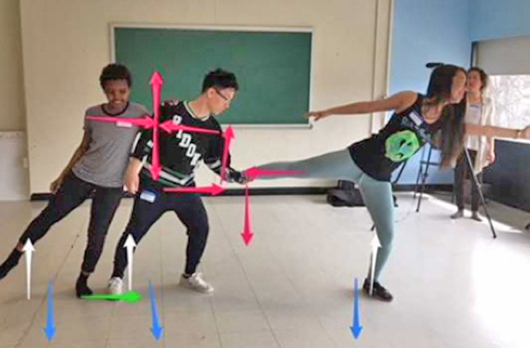
Project SummaryThe Choreographing Science project brought scientists, middle school youth and choreographers together to explore unsettled scientific phenomena from a complex systems perspective using choreography and agent-based modeling to engage in cutting edge scientific inquiry. Given the ubiquity of complex systems, being able to adopt a complex systems perspective is critical to understanding the world and our relationship to it. However, research has shown that this can be a challenge, especially for youth. While most complex systems research has not focused on the role of the body, recent studies have shown the promise and potential of embodiment as its own form of reasoning about complex systems. Thus, this project created exploratory science spaces foregrounding embodiment in the process of scientific discovery.
The program had two phases: (1) a 20-hour training workshop where scientists and choreographers engaged in interdisciplinary collaborative design work, and (2) a 60-hour summer program where the researcher-practitioner partnership involving scientists, choreographers and youth engaged in agent- based & embodied choreographic scientific modeling.
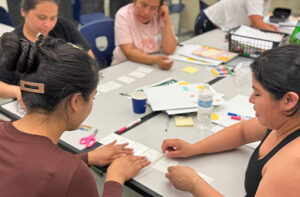
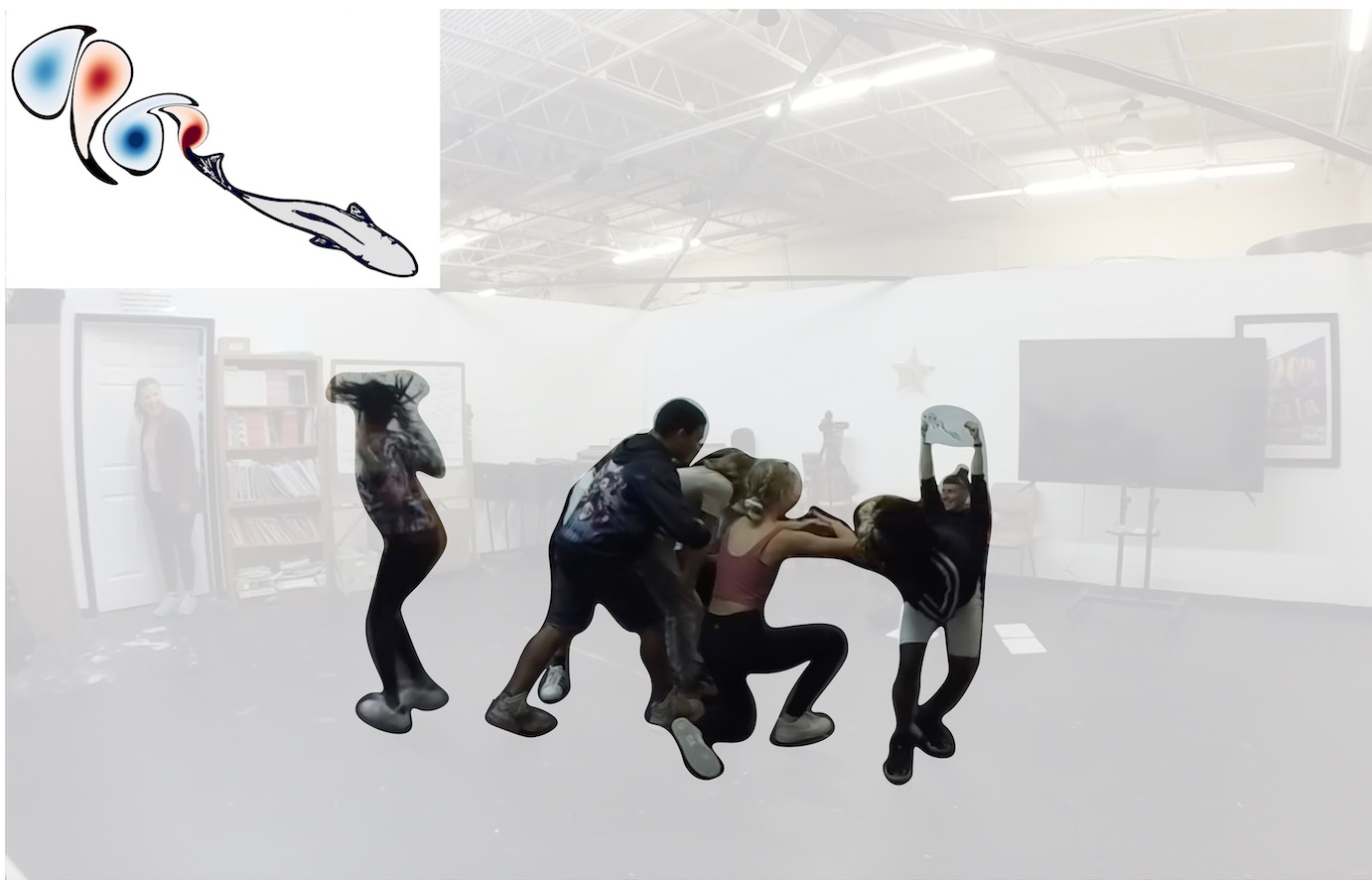
The summer program took place in community-based centers in Gainesville, FL and Boston, MA broadening perceptions of what science research looks like and can be. Each site hosted 20 youth, two local scientists, and a local choreographer. Participants engaged in embodied collaborative inquiry, brainstorming and modeling to create choreographic representations and culminate in a public event for the community.
The project aimed to understand the experiences of and shifts in youth and scientists as they engage in these activities and to understand how to design such a model for informal learning. The project also helped scientists apply a complex systems lens to their own work and settled perspectives.
This project was funded by the Advancing Informal STEM Learning (AISL) program which seeks to advance new approaches to, and evidence-based understanding of, the design and development of STEM learning in informal environments.
Research ActivityThis Design-Based Research project created exploratory science spaces that foregrounded embodiment in the process of scientific discovery. We engaged in ethnographic video data collection and interaction analysis. Working across two different informal learning sites, we have conducted two cycles of design, implementation, and analysis, with the second informed by learnings and outcomes from the first.
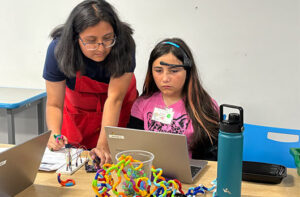
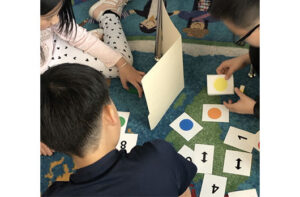
Participants worked together to construct embodied and computational models as a way of understanding complex systems and science phenomena. Research questions focused on (1) how engaging in the process of creating dynamic science representations of complex systems contributes to new ways of understanding science; desettles ideas about the process of how science gets “made”; and impacts understanding of their role (and the role of the body) in making science for youth and scientists; and (2) how arrangements of bodies and modeling tools can work together to support sense-making of an unsettled scientific problem from a complex systems perspective.
ImpactThis project provided insights on the relationship between choreography and ABM as tools for scientific sense-making and expand ABM to consider the role of movement and bodies more broadly in physical space. It also contributed to an understanding of how underrepresented youth’s perceptions and conceptions of science can be shaped through embodied science activities, and of the relationships these youth see between their own bodies and identities, science, and the creative arts.
Dionne N. Champion, TERC Alum
Aditi Wagh (MIT), Co-PI
Lauren Vogelstein (NYU), Co-PI
Project SummaryThe Choreographing Science project brought scientists, middle school youth and choreographers together to explore unsettled scientific phenomena from a complex systems perspective using choreography and agent-based modeling to engage in cutting edge scientific inquiry. Given the ubiquity of complex systems, being able to adopt a complex systems perspective is critical to understanding the world and our relationship to it. However, research has shown that this can be a challenge, especially for youth. While most complex systems research has not focused on the role of the body, recent studies have shown the promise and potential of embodiment as its own form of reasoning about complex systems. Thus, this project created exploratory science spaces foregrounding embodiment in the process of scientific discovery.
The program had two phases: (1) a 20-hour training workshop where scientists and choreographers engaged in interdisciplinary collaborative design work, and (2) a 60-hour summer program where the researcher-practitioner partnership involving scientists, choreographers and youth engaged in agent- based & embodied choreographic scientific modeling.
The summer program took place in community-based centers in Gainesville, FL and Boston, MA broadening perceptions of what science research looks like and can be. Each site hosted 20 youth, two local scientists, and a local choreographer. Participants engaged in embodied collaborative inquiry, brainstorming and modeling to create choreographic representations and culminate in a public event for the community.
The project aimed to understand the experiences of and shifts in youth and scientists as they engage in these activities and to understand how to design such a model for informal learning. The project also helped scientists apply a complex systems lens to their own work and settled perspectives.
This project was funded by the Advancing Informal STEM Learning (AISL) program which seeks to advance new approaches to, and evidence-based understanding of, the design and development of STEM learning in informal environments.
Research ActivityThis Design-Based Research project created exploratory science spaces that foregrounded embodiment in the process of scientific discovery. We engaged in ethnographic video data collection and interaction analysis. Working across two different informal learning sites, we have conducted two cycles of design, implementation, and analysis, with the second informed by learnings and outcomes from the first.
Participants worked together to construct embodied and computational models as a way of understanding complex systems and science phenomena. Research questions focused on (1) how engaging in the process of creating dynamic science representations of complex systems contributes to new ways of understanding science; desettles ideas about the process of how science gets “made”; and impacts understanding of their role (and the role of the body) in making science for youth and scientists; and (2) how arrangements of bodies and modeling tools can work together to support sense-making of an unsettled scientific problem from a complex systems perspective.
ImpactThis project provided insights on the relationship between choreography and ABM as tools for scientific sense-making and expand ABM to consider the role of movement and bodies more broadly in physical space. It also contributed to an understanding of how underrepresented youth’s perceptions and conceptions of science can be shaped through embodied science activities, and of the relationships these youth see between their own bodies and identities, science, and the creative arts.
The Choreographing Science project brought scientists, middle school youth and choreographers together to explore unsettled scientific phenomena from a complex systems perspective using choreography and agent-based modeling to engage in cutting edge scientific inquiry. Given the ubiquity of complex systems, being able to adopt a complex systems perspective is critical to understanding the world and our relationship to it. However, research has shown that this can be a challenge, especially for youth. While most complex systems research has not focused on the role of the body, recent studies have shown the promise and potential of embodiment as its own form of reasoning about complex systems. Thus, this project created exploratory science spaces foregrounding embodiment in the process of scientific discovery.
The program had two phases: (1) a 20-hour training workshop where scientists and choreographers engaged in interdisciplinary collaborative design work, and (2) a 60-hour summer program where the researcher-practitioner partnership involving scientists, choreographers and youth engaged in agent- based & embodied choreographic scientific modeling.
The summer program took place in community-based centers in Gainesville, FL and Boston, MA broadening perceptions of what science research looks like and can be. Each site hosted 20 youth, two local scientists, and a local choreographer. Participants engaged in embodied collaborative inquiry, brainstorming and modeling to create choreographic representations and culminate in a public event for the community.
The project aimed to understand the experiences of and shifts in youth and scientists as they engage in these activities and to understand how to design such a model for informal learning. The project also helped scientists apply a complex systems lens to their own work and settled perspectives.
This project was funded by the Advancing Informal STEM Learning (AISL) program which seeks to advance new approaches to, and evidence-based understanding of, the design and development of STEM learning in informal environments.
This Design-Based Research project created exploratory science spaces that foregrounded embodiment in the process of scientific discovery. We engaged in ethnographic video data collection and interaction analysis. Working across two different informal learning sites, we have conducted two cycles of design, implementation, and analysis, with the second informed by learnings and outcomes from the first.
Participants worked together to construct embodied and computational models as a way of understanding complex systems and science phenomena. Research questions focused on (1) how engaging in the process of creating dynamic science representations of complex systems contributes to new ways of understanding science; desettles ideas about the process of how science gets “made”; and impacts understanding of their role (and the role of the body) in making science for youth and scientists; and (2) how arrangements of bodies and modeling tools can work together to support sense-making of an unsettled scientific problem from a complex systems perspective.
ImpactThis project provided insights on the relationship between choreography and ABM as tools for scientific sense-making and expand ABM to consider the role of movement and bodies more broadly in physical space. It also contributed to an understanding of how underrepresented youth’s perceptions and conceptions of science can be shaped through embodied science activities, and of the relationships these youth see between their own bodies and identities, science, and the creative arts.
This project provided insights on the relationship between choreography and ABM as tools for scientific sense-making and expand ABM to consider the role of movement and bodies more broadly in physical space. It also contributed to an understanding of how underrepresented youth’s perceptions and conceptions of science can be shaped through embodied science activities, and of the relationships these youth see between their own bodies and identities, science, and the creative arts.
 Computer Science
 Out of School / Informal Education
 Science
Funder:
U.S. National Science Foundation
Award Number:
# 2115773
September 2021 – August 2024
Past ProjectThis project is no longer active. To see a list of current TERC projects, please click here.
Share This Page: