Agentic Interest Development: How Spanish- and English-Speaking Caregivers from Low-Income Communities Leverage STEM Programs to Support Their Family Goals and Interests
Scott Pattison, Smirla Ramos Montañez, Viviana López Burgos, Gina Svarovsky, Annie Douglass, Julie Allen, Catherine Wagner, Alicia Santiago, Nelda Reyes
Summary
In the STEM interest literature, and the education field more broadly, families and caregivers are often portrayed as passive recipients of STEM engagement opportunities, and their interests are often assessed based on a narrow, researcher centered perspective of what counts as STEM. However, equity scholars have highlighted the pressing need to expand perspectives on STEM engagement and center the voices and experiences of families—especially those from communities that have been institutionally and systemically marginalized in STEM education.
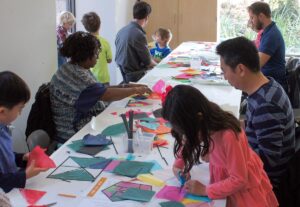
In this study, conducted in the context of an early childhood, family-focused informal engineering education program, we built on existing research on STEM agency to explore how caregivers leveraged the program to support their interests and those of their families, both related to STEM and more broadly. As part of a larger design-based implementation research (DBIR) study, we developed in-depth, longitudinal case studies with 12 English- and Spanish-speaking caregivers from low-income communities based on their experiences before, during, and up to 1 year after the program. All 12 caregivers described existing interests that motivated them to participate.
Qualitative analysis of the case studies revealed how these caregivers demonstrated agency in several ways:
- Leveraging the program to support their interests and those of their families
- Flexibly and creatively connecting the program with other interests as they learned more about the opportunities afforded by the program
- Navigating challenges external to the program to remain involved and support initial and emerging interest connections.
The findings highlight the need to rethink traditional, deficit-based perspectives on STEM interest and to explore new approaches for centering caregiver and family interests in the development and implementation of STEM learning programs.
Content Areas:
 Engineering
 Research / Evaluation
Share This Page:EngineeringResearch / Evaluation