
TERC Researchers Showcase Real-World, Data-Driven Learning at NSTA 2026
TERC educators will present at the 2026 NSTA Conference in Anaheim, showcasing hands-on, data-driven approaches to teaching science. Their sessions highlight how real-world data can engage students and strengthen critical thinking across disciplines.
TERC will also be exhibiting at NSTA 2026—stop by our booth to learn more about our innovative STEM education work, explore current projects, and connect with our team.
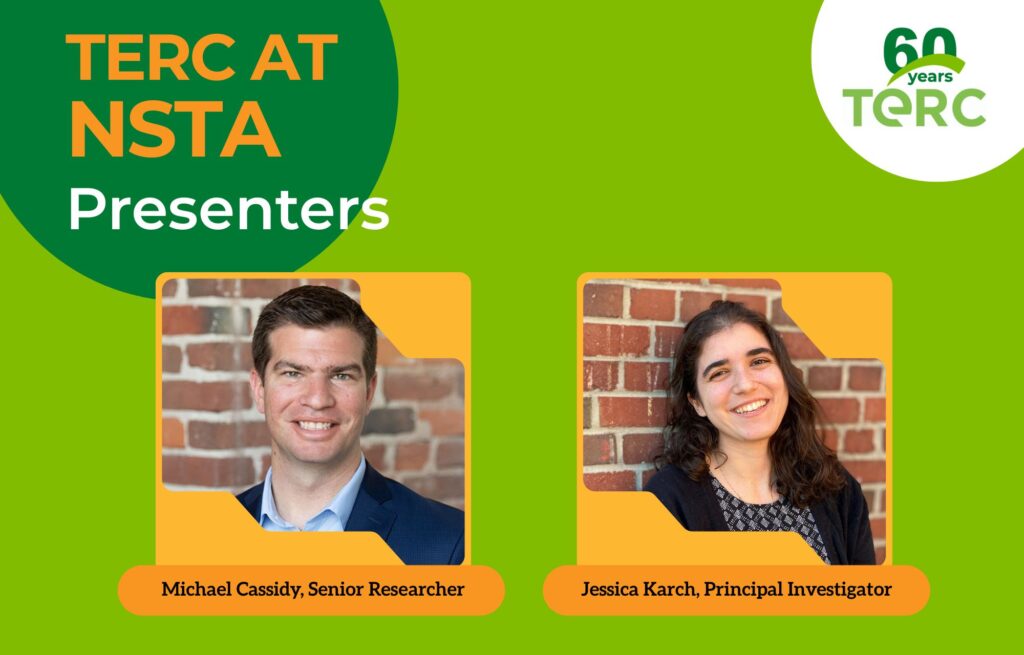
Saturday, April 18 at 8am
Presentation Title: Making Heat Visible: Engaging Students with Pocket Lab Data Collection & Visualization tools
Presenters: Jessica Karch and Mellissa Pfaff
Summary: This NIH-funded, randomized control trial (RCT) studied the implementation and impact of a 2-week long NGSS-aligned environmental science unit, “HeatViz,” on high school students’ knowledge and attitudes about science. Students use cutting-edge mobile sensors to gather data in their own communities, visualize areas of excess heat, and interpret data to explore and understand the urban heat island (UHI) effect, how it might be ameliorated, and potential impacts of excessive heat on human health. Pre/post surveys, assessments, and teaching logs were collected from over 100 8th-12th grade environmental science and biology classes. Using aggregated data and examples from one classroom implementation, we will share how HeatViz supported students’ deep engagement with science and engineering practices, such as analyzing and interpreting data, and supported learning cross-cutting concepts addressed across many grade levels in topics as varied as Earth Science to AP Biology.
Takeaways: Teachers will learn strategies to use mobile sensors to teach cross-cutting concepts, like human impact on the environment and energy and matter. Collecting, analyzing and interpreting data to address real-world problems creates conditions to support students’ interest in science.
Saturday, April 18 at 1pm
Presentation Title: Making Sense of Data in Healthcare: Teaching with Pulse Oximeters
Presenters: Michael Cassidy and Elizabeth Price
Summary: This workshop uses pulse oximeters to engage participants in exploring real-world phenomenon and illustrate how data analysis is central to understanding science. Participants will engage in a 5E lesson that integrates NGSS science and engineering practices, crosscutting concepts, and disciplinary core ideas while examining bias in medical devices. Through hands-on activities, CODAP visualizations, and examples from student work, teachers will learn strategies to help students critically analyze authentic health data. Takeaways include a pulse oximeter activity adaptable for high school biology, computer science, data science, and biomedical CTE pathways.
Takeaways: A hands-on pulse oximeter activity that illustrates bias in medical devices and is adaptable for biology, computer science, data science, and biomedical CTE pathways.