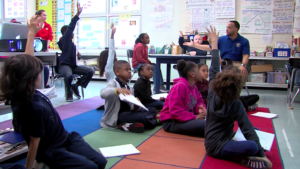

Building a Town or City: Connecting Math, Science, and Social Studies in Grades 1-2
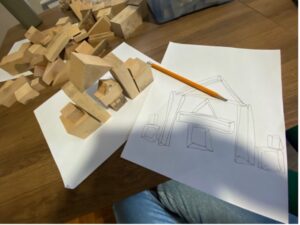
The community a young child lives in and the buildings that are a part of it can be an important part of students’ lives and is ripe for mathematical connections to geometry...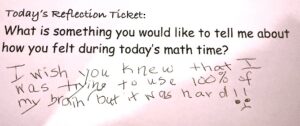
Emotions in Math Class: How Student Reflection Can Build Awareness and Resilience
How might student reflection support students and teachers in recognizing and working through emotions that can interfere with learning in math class?
Temperature: Connecting Math, Science, and Social Studies in Grade 5
Students interpret line graphs about places with extreme temperatures, learn about Matthew Henson's role in an expedition to the North Pole, and make line graphs showing the average temperature in a place someone in their family or neighborhood has lived.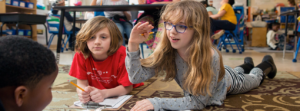
Reflections from the Classroom: Students as Agents of Their Learning
Math specialist Rachel Goldner describes working towards her goal: "students [who] look less often at me for assurance, correct answers and approaches and...instead look within themselves for how to solve problems."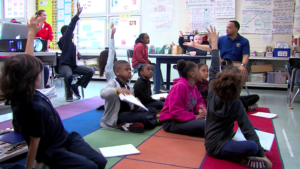
Developing an Equitable Math Learning Community from Day 1
Establishing and maintaining an equitable math learning community requires explicit attention, careful planning, and hard work, from the beginning of the school year.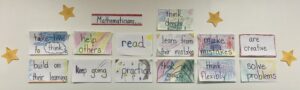
A New Class, A New Year: The Role of Classroom Agreements
A critical component of a community where every student feels like they belong is the development of classroom agreements.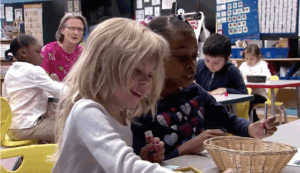
A Space for All of Us: Setting Up the Classroom
How can the design of a room promote the distribution of math authority, equitable participation, and respect for different learners? How can it ensure that students see themselves, feel welcome, and understand that this will be a joint undertaking?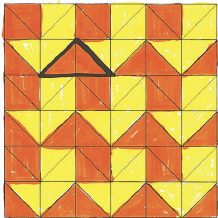
Quilts: Connecting Math, Art, and Communities in the Primary Grades
Students investigate features of shape as they learn about quilts and quilters and as they make their own paper quilts.
Math Workshop: A Structure that Supports Equity in the Elementary Math Classroom
Math Workshop can foster the development of an equitable learning community. When it is structured to foster independence and encourage students in taking responsibility for their own learning and the learning of others, it can also the development of mathematical identity and agency.