
Explore resources and projects that relate to the categories of the framework of the Forum for Equity in Elementary Mathematics.
- Setting the Context
- Deep and Rigorous Math
- Strength-Based Assessment and Accomodation
- Equitable Participation in a Collaborative Mathematics Community
- Connections to Students, Their Families, and Communities
Setting the Context
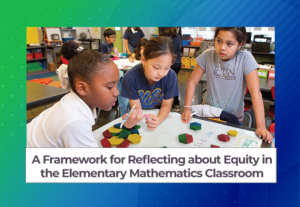
A Framework for Reflecting about Equity in the Elementary Mathematics Classroom (Russell et. al., 2023) is a tool for educators who want to engage in collaborative reflection on equity, identity, and agency in mathematics learning and teaching. (See the Speaker Series Session.)
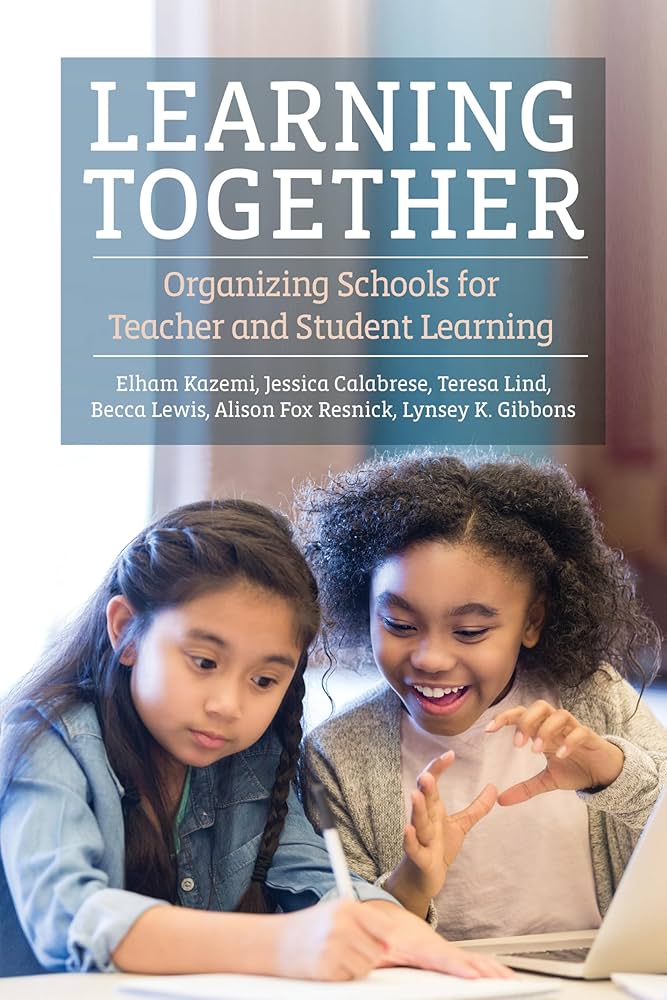
Learning Together (Kazemi et al, 2024) offers guidance on fostering collaboration among educators to create dynamic, supportive learning environments that promote growth for both students and teachers.
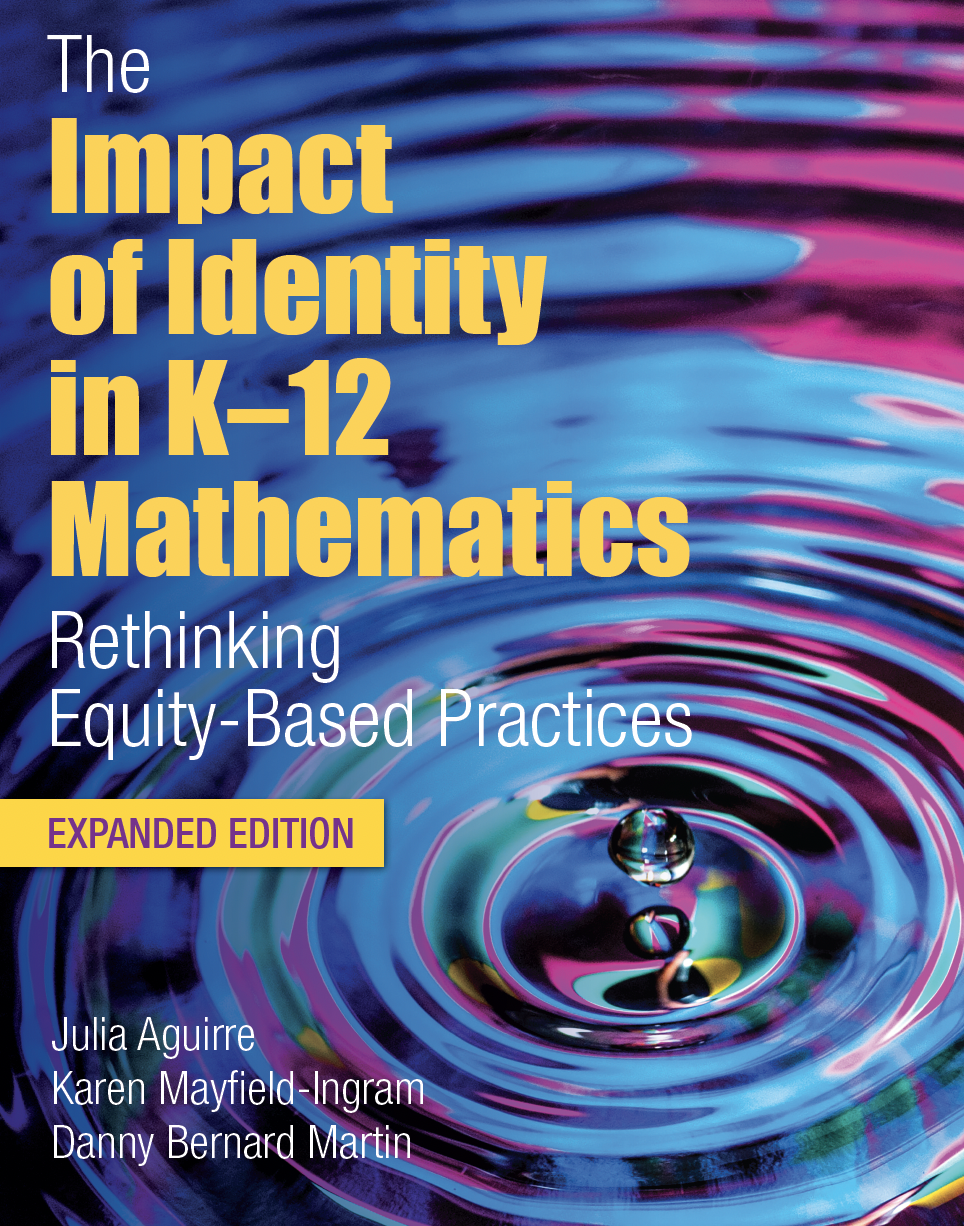
The Impact of Identity in K-12 Mathematics: Rethinking Equity-Based Practices (Aguirre et. al., 2024), explores how teaching practices influence students’ perceptions of themselves as mathematics learners, emphasizing the need for teachers to engage in critical reflection and embrace equity-based practices.
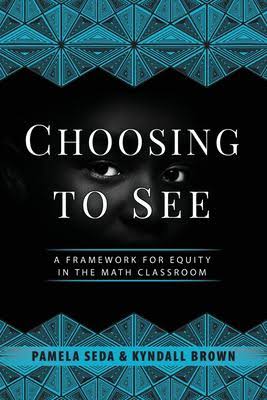
Choosing to See: A Framework for Equity in the Math Classroom (Seda and Brown, 2021) encourages educators to reimagine mathematics education by centering equity, student potential, and the lived experiences of Black and Brown learners. (Watch the Speaker Series Session.)
Deep and Rigorous Mathematics
Marilyn Burns Math is an online resource that supports K–5 educators in strengthening numeracy and mathematical reasoning. The site offers professional learning resources, tasks, and insights focused on listening to students’ thinking, using mental strategies, and making instructional decisions based on how students’ reason mathematically. (Listen to the Speaker Series Session.)
Interweaving Equitable Participation and Deep Mathematics (Schifter and Russell, 2024) focuses on teaching deep and challenging mathematics while also centering equitable participation for all students. (Listen to the Speaker Series Session.)
Setting Up High-Impact Tasks in Elementary School Math Centers (Wagner & Szymaszek, 2024) explains how “math workshop can become integral to the creation of equitable math classrooms and be a place for students to develop strong habits of mind alongside math competencies.” (Edutopia)
Moving Beyond Status in Math Class (Sunkle & Wagner, 2023) explains how “focusing on ideas rather than individual students…can move [math teachers] beyond assumptions that some kids are ‘good’ at math.”
Choral Counting and Counting Collections (Franke et. al., 2018) explores ways in which two routines can transform your elementary math classroom, your students’ math understanding, and your partnerships with families.
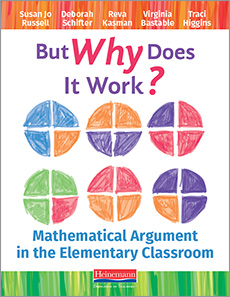
But Why Does It Work? (Schifter and Russell, 2017) explores how to integrate mathematical argument into elementary math instruction.
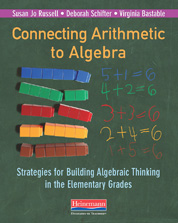
Connecting Arithmetic to Algebra (Schifter and Russell, 2011) illustrates how investigating the behavior of whole number operations can move K–6 students forward.
Strength-Based Assessment and Accommodation
In Recommendations for Equitable Mathematics Teaching Practices for English Language Learners, Dr. Judit Moschkovich explains that “students from non-dominant communities need access to curricula, instruction, and teachers effective in supporting academic success for this student population.” Critical characteristics of such instruction include “a view of language as a resource, not a deficiency; and an emphasis on academic achievement, not only learning English.” (Equity Alliance)(Listen to the Speaker Series Session.)
Jenna Laib is a blog focused on equitable, student-centered mathematics instruction. Through classroom reflections, clinical interviews, and practical routines, this math specialist highlights the importance of listening to students’ thinking, presuming competence, and designing learning experiences that expand access, foster agency, and support meaningful mathematical participation for all learners. (Listen to the Speaker Series Session.)
Listening to Learn is a K–5 digital interview tool created by Marilyn Burns and Lynne Zolli, to help teachers understand how students’ reason numerically. In 1:1 interviews, students solve problems mentally and explain their thinking. The tool captures and maps responses to key reasoning strategies. Individual and class reports support instructional planning grounded in students’ mathematical reasoning.
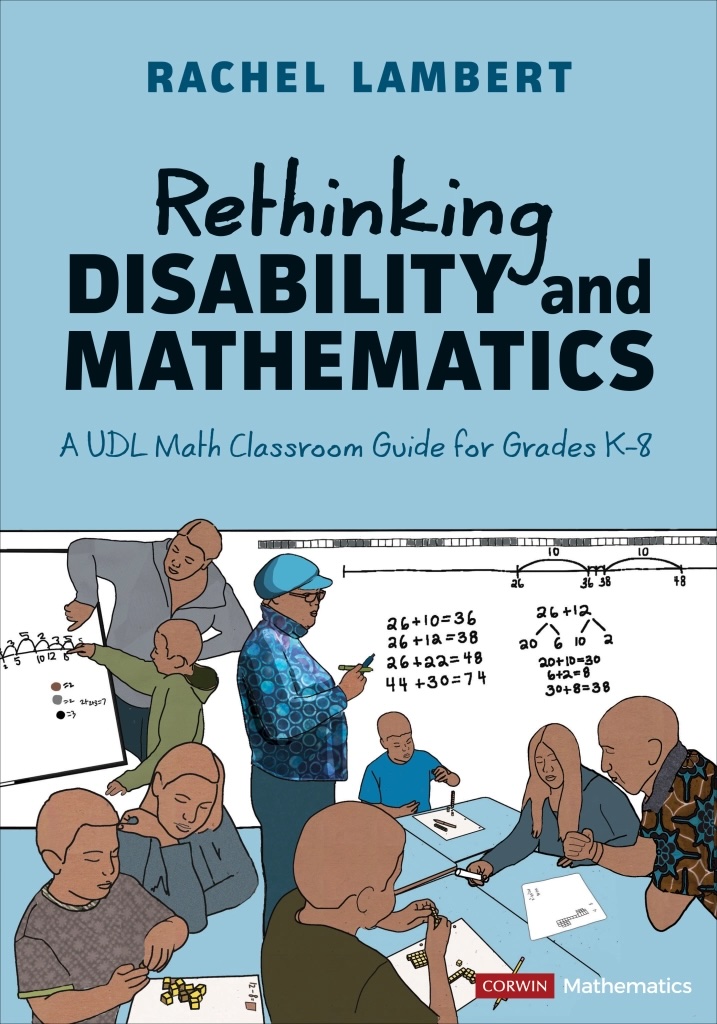
Rethinking Disability and Mathematics (Lambert, 2024) calls for a shift from deficit thinking to inclusive math teaching and introduces Universal Design (UDL Math) as a framework that supports neurodiverse and students with disabilities through accessible, engaging instruction rooted in their strengths and experiences. (Watch the Speaker Series Session.)

My Kids Can (Storeygard, 2017) and Count Me In (Storeygard, 2012) focus on research-based and field-tested methodologies for teaching math to the range of learners. They describe instructional strategies that move all math learners toward grade-level competency, and help elementary teachers create programs for students with special needs.
Equitable Participation in a Collaborative Mathematics Community

Teacher Reflection: Critical for Discussions is an MTLT article by Arusha Hollister and Lynne Godfrey that describes a teacher reflection tool designed to help K–5 educators foster equitable participation and a sense of belonging for all students in mathematics discussions. (March, 2026)
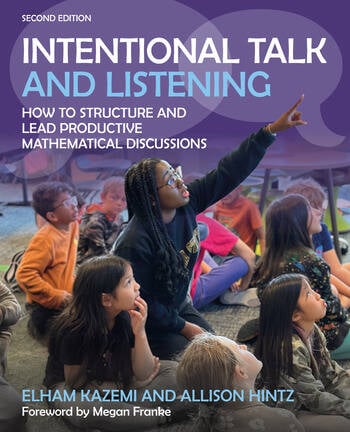
Intentional Talk and Listening: How to Structure and Lead Productive Mathematical Discussions (Kazemi et. al., 2025) presents a practical framework for planning and facilitating purposeful math talks. This second edition explores the role of children’s and communities’ funds of knowledge and focuses on supporting students’ active participation as listeners and speakers. (Watch the Speaker Series Session.)
Using Student Reflections to Inform Your Small Groups (Sussman & Garcia, 2024) explains how “using students’ perspectives on math classes to inform your grouping practices can positively impact how they see themselves as math learners.” (Edutopia)
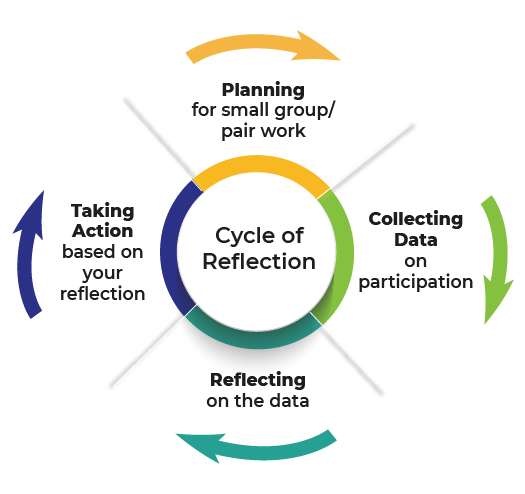
Reflection Tools (Math Equity Forum, 2024) provide a structure for collecting data and engaging in evidence-based reflection about student participation in math discussions and in small group work, and the teaching practices that may affect it. Learn more and download.
Connections to Students, Their Families, and Communities

Excursions: Activities That Foster Mathematical Belonging is an MTLT article by Annie Sussman and Megan Murray that explains how activities that connect the math students are learning to their lived experiences and communities can foster a culture of belonging. (March, 2026)

Cultivating Mathematical Hearts (Aguirre et. al., 2023) advocates for reimagining math education by centering students’ humanity, cultural backgrounds, and lived experiences to create inclusive engaging learning environments. (Watch the Speaker Series Session.)
Advancing Equity and Strengthening Teaching with Elementary Mathematical Modeling is an online resource that offers tools and strategies to support culturally responsive mathematics teaching and learning. Resources include math modeling routines and tasks to support K-5 educators in creating equitable learning opportunities for their students. (Watch the Speaker Series Session.)
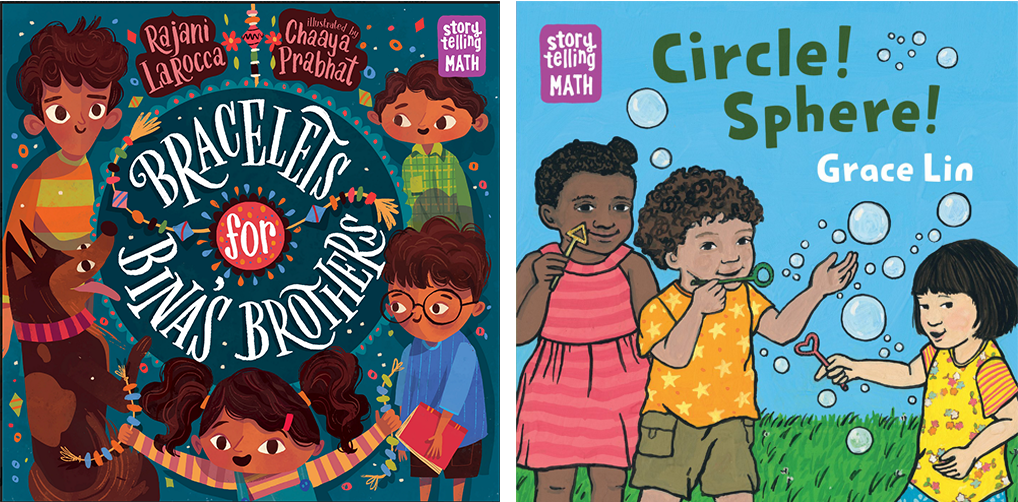
Storytelling Math celebrates children using math in their daily adventures as they play, build, and discover the world around them. Joyful stories and hands-on activities make it easy for kids and their grown-ups to explore everyday math together. Read an article about the project and explore more information about the books. (View the Speaker Series Session.)
