
Research
How sound shapes what visitors feel and learn
Sound Travels aims to describe visitors’ experience of soundscapes and how they influence STEM learning outside of school.
Anytime humans gather, sounds vary a lot. Over four years, researchers from TERC, COSI’s Center for Research and Evaluation and Northwestern University, together with artists, acoustic ecologists and educators, recorded hundreds of hours of audio in zoos, parks, botanical gardens and science centers, and asked about a thousand visitors what they heard and how it made them feel: energized, curious, peaceful, or uneasy. There is a lot to hear. Take the team’s soundwalk through the study sites, read the papers, and try the tools the research produced. Events, guides and activities are under Outreach.
Soundscapes and Intention · Papers & presentations · Research tools · Further reading
Start here · StoryMap for educators and designers
Soundscapes and Intention
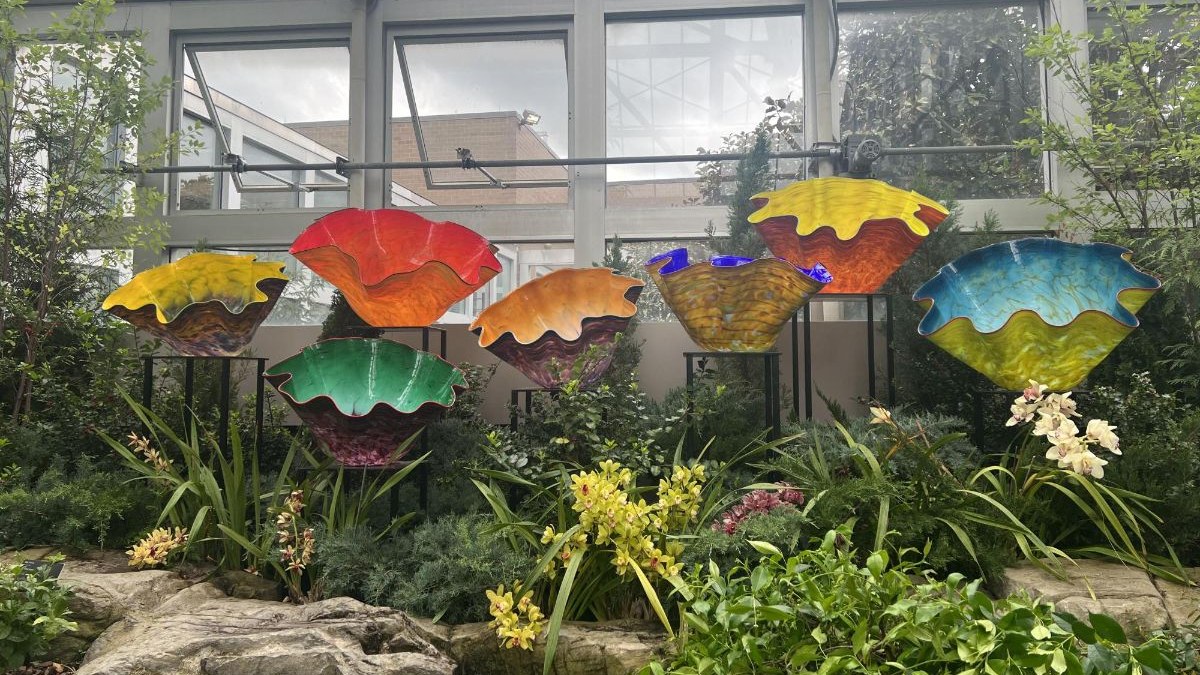
Take a soundwalk with the research team through the places they studied: a conservatory, a science center, a zoo and a park. Along the way, hear what visitors noticed, what calmed or unsettled them, and what that means for anyone who designs a space where people learn. By TERC, COSI and Northwestern University researchers · April 2025.
Papers & presentations
As the first study of its kind, Sound Travels has a lot to share, and the team has been taking it on the road: to colleagues in informal learning, acoustics, anthropology, and zoos and aquariums. Papers and conference talks are listed first, then the project’s own reports and briefs. Most open as a PDF. Analysis is ongoing, so check back as new papers from COSI’s Center for Research and Evaluation are added.
PAPER · APPLIED ACOUSTICS
Constructing soundscapes: soundscape optimization and self-directed learning in outdoor environments
Hanbing Liang, University of Wisconsin-Madison · Applied Acoustics 255 (2027) 111493
CONFERENCE PRESENTATION
Bang, whoosh, roooaarrrr! Ways sound affects learners at zoos and aquariums
AZA 2026 Annual Conference · September 30, 2026 · Laura Weiss, Danielle Ross, Kelly Riedinger, Grayson Ponti and Joe E. Heimlich · Slides (PDF)
CONFERENCE PRESENTATION
Unpacking the CRaTE: measuring visitors’ cultural relationships and topical exploration
Visitor Studies Association · Omaha, NE · July 12, 2022 · Laura Weiss & Dolly Hayde · Session abstract, pp. 6–7
CONFERENCE PRESENTATION
The sound of culture: exploring acoustical features of sounds perceived in free-choice learning environments
Acoustical Society of America · November 19, 2024 · Donnelley Hayde
CONFERENCE PRESENTATION
Sound Travels research and its premise
Society for Applied Anthropology · 2024 · Hayde & Meyer
RESEARCH BRIEF
Sound Travels: visitor research update
Key ideas from visitor-focused data collection in project Year 2 · 2025
REPORT
Identifying, perceiving, and understanding sound
How informal educators on the project described sounds
REPORT
Learning from site visits
Observations from visits to a botanic garden, science center, zoo and park · Year 1
REPORT
Data maps
Relationships of interest among categories and constructs in the data set · Year 2, December 2024
WORKSHEET
Sounds in your program or exhibit
From the AZA 2026 session: list the sounds in your program or exhibit by type, choose an approach for each, and say why · PDF
Research tools
Crowdsourcing emotional responses
Two ways to try the research yourself: rate how the sounds the team recorded make you feel, or build a soundscape and test your own focus.
Research survey and tool · Sound and emotion
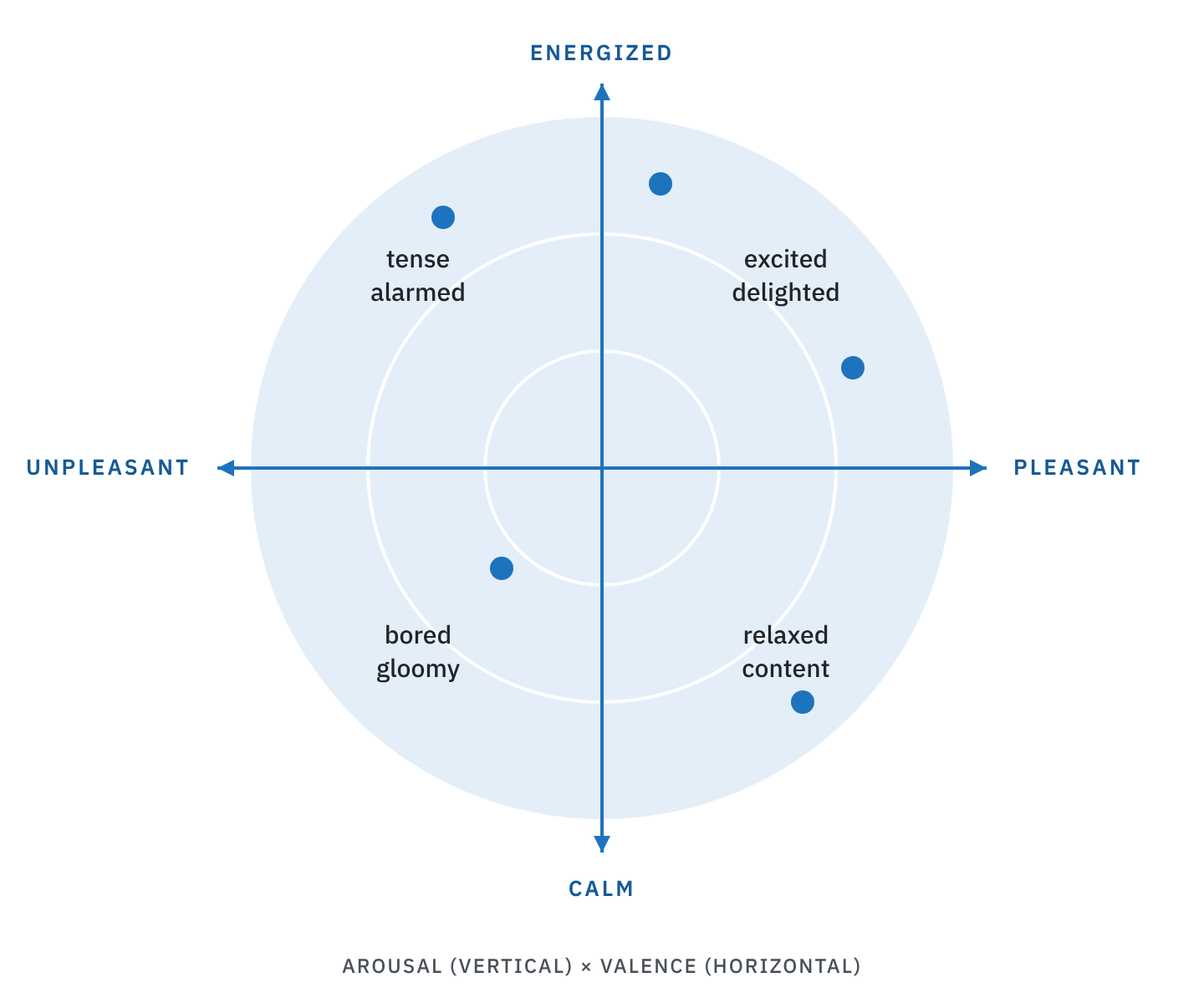
Where does your soundscape live in emotional space?
Listen to recordings from the study sites and place each one on the circumplex, from calm to energized and from unpleasant to pleasant. Then see how your ratings compare with others’ ratings. Designers can run their own exhibit mockups through it before and after a redesign.
Help with data collection. Every survey response makes the predictive tool more robust. Type TEST when prompted.
Research tool · Where You Focus
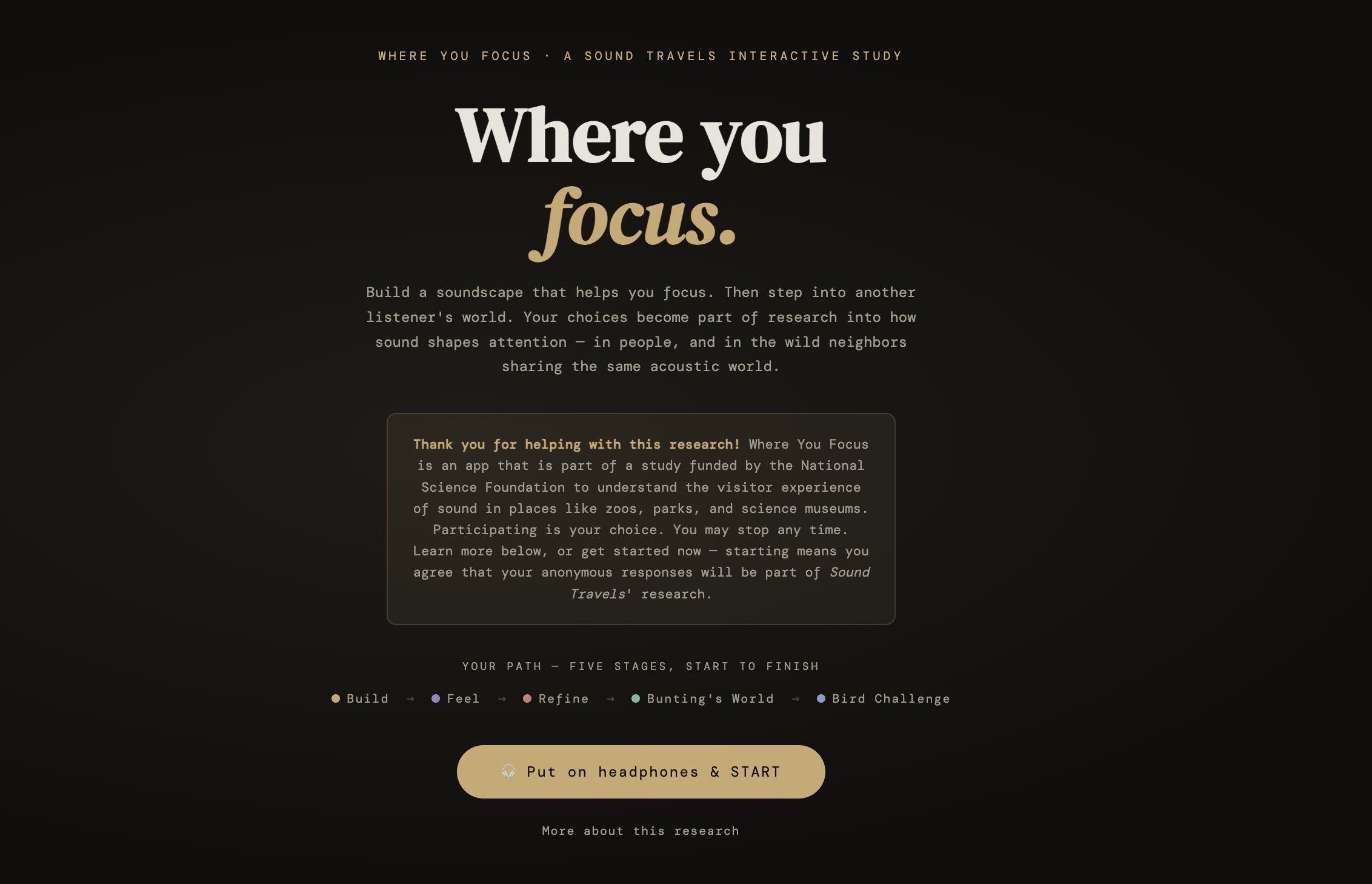
Can you focus here?
Build a spatial soundscape you could focus in and rate how each sound makes you feel. Then step into a painted bunting’s world and turn sounds down until you can hear its mating call.
Further reading and listening
Sound Travels leaders have published on ecology, acoustics, and music and its impact. Here are some of our favorite resources beyond the project.
For exhibit designers
- Sound Advice: Acoustic Considerations for Museum Design (Weatherhead, 2007). Start with a sonic map, and plan on at least four players: exhibit designer, acoustics engineer, A/V or multimedia designer, and museum leader.
- The trap of natural soundscapes. Visitors to “Sugar from the Sun” went looking for the recorded insects and birds, and began questioning whether the experience was real (Gyllenhaal, 2008).
- Language and emotion. “Coast to Cactus in Southern California” used Spanish, English and Spanglish. Hearing a first language may distract from STEM concepts but deepen the intent to return.
- Whose sounds get collected? Tourle (2017) argues that the crowd-sourced “Sounds of Our Shores” favored pleasant natural sounds and erased soundscapes of protest and working-class life.
- Models for engagement: “Virtual Museum: Reconnecting to the Natural Heritage” (Boulder, CO) and “The Affective Geography of Silence: Towards a Museum of Natural Quiet.”
Acoustic ecology and listening
- World Forum for Acoustic Ecology, including its 2023 conference with the Atlantic Center for the Arts
- World Listening Day, held each July 18, R. Murray Schafer’s birthday
- Listening Across Boundaries, a 2022 Midwest Society for Acoustic Ecology workshop recording, with AudioMoth tips
- A tribute to Schafer on Flight Risk (KOPN), with Hildegard Westerkamp and Eric Leonardson, also archived on Music From Other Minds
- AudioMoth, an open-source acoustic monitor for wildlife
- A World of Sound, short articles from the International Year of Sound
Parks and natural soundscapes
- NPS Natural Sounds & Night Skies Division and its sound gallery
- A study of signs, whispers, and the experience of Muir Woods (Levenhagen et al., 2020)
- Telemetry, an audio series on the sound of science in Yellowstone
- Young Sound Seekers and an audio postcard from Canaveral National Seashore
Science, sound and data
- Noise distracts foraging bats (Allen, Hristov et al., 2021)
- Singing Insects, Carl Strang’s research on Chicago-area cicadas, crickets and katydids
- Earth System Music, musical interpretations of data sets
- Accessible Oceans, auditory displays of ocean data from Woods Hole
- What is noise pollution? (World Atlas)
- Recommended by Eric Leonardson: INTECOL and OSF resources
Books
- The Nature Fix, Florence Williams
- The Great Animal Orchestra, Bernie Krause