
Volume 2, Issue 10 | December 2025

Warm seasons’ greetings! Our newsletter this month is full of resources. Maybe some of these will be just what you need in the new year! The deadline to submit something for inclusion in the January newsletter is Friday, January 16th.
Updates
Applications for the 2026 Climate and Equity Institute are now open. This year, we will be accepting 18 teachers. The application along with detailed information about the Institute can be found on our website: https://www.terc.edu/climateandequity/applications/
Resources
Lee Teevan (’25) reviews The Nutmeg’s Curse: Parables for a Planet in Crisis by Amitav Ghosh (2021):
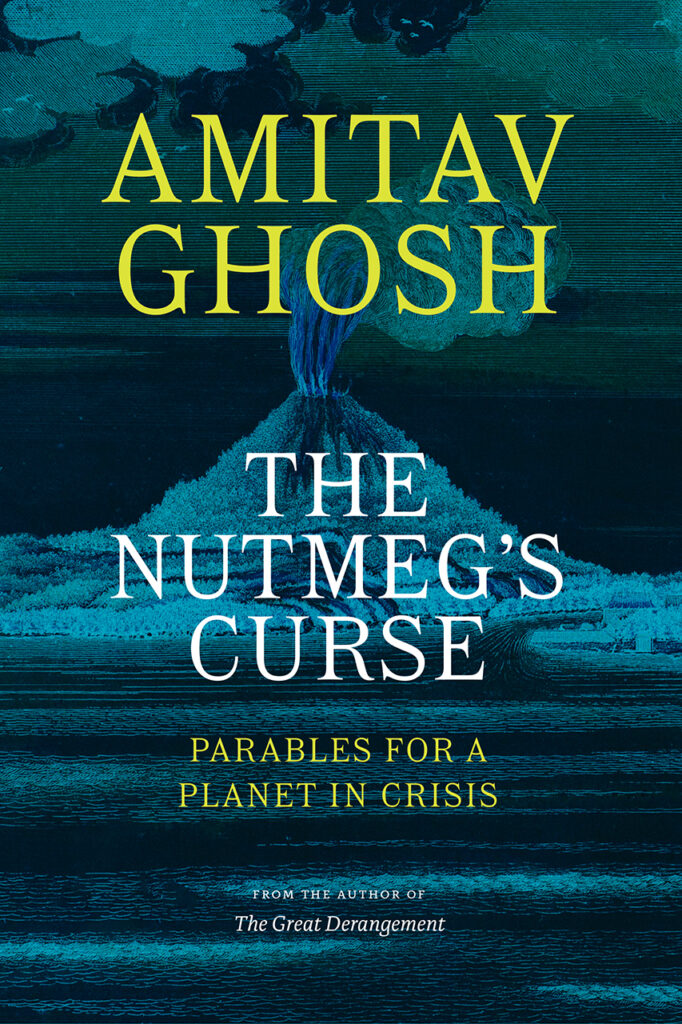
To understand our global climate crisis, the exploitation of natural resources and the genocide of indigenous peoples framed in the story of the pursuit of the nutmeg spice in the 1600’s is both profound and unsettling. Ghosh (2021) relates the human and environmental tragedy resulting from the Dutch exploitation of the Banda Islands in the Indian Ocean. The Dutch sought the rare and desired nutmeg spice, destroying the humans and environment in their pursuit of this resource.
Ghosh illustrates how this tale is repeated throughout history and time as colonial powers seek more land and resources. Because this tragedy is recurring, albeit with new actors and settings, Ghosh posits whether this is due to our Western view of resources. He calls for more sustainable perspectives through which we can view Earth’s resources and indigenous peoples. Through this tale of nutmeg, he ties in current issues such as racism, immigration and global inequality. Understanding the complexity of these issues requires going beyond the destructive and ineffective ideas of colonial powers.
I found the ideas discussed in this book both illuminating and jarring. The skillful interlocking of past and present tales of exploitation by Ghosh had me rereading certain sections and going off in new directions as I looked into works he mentioned in his extensive bibliography. Because of this book, I have been looking into ecolinguistics, an intersection of language and ecology that examines how cultures interpret their environment. The Nutmeg’s Curse has opened up a new perspective through which I hope to better understand and interpret our global environmental crisis.
Resources to Support Student Action:
At the recent call-back meeting, Fellows shared many resources to help their students connect with national climate-change and equity efforts. Such efforts can give students a way to connect their local engagement with actions that are have a broader reach. We provide some of the links in this newsletter, and the rest next time (a long list). If you have experience with any of these, we encourage you to share your observations with your colleagues — either send some notes in for this newsletter, or post on the Google Group.
- NOAA Ocean Guardian Youth Ambassadors program
- The National Phenology Network: Nature’s Notebook
- Bioneers (Climate and Justice solutions)
- The GLOBE citizen science network (also see here)
- Walking Softer and their young leaders awards
- Humane Education’s Solutionaries project
STEM Teaching Tools #106: “Defending and Leveraging Public Climate & Environmental Justice Data.”
Have you used it? If so, let us know what you think of it — what works, what doesn’t.
Breaking the climate silence: Predictors of discussing global warming with family and friends:
A new paper in PLOS Climate on what it takes for people to “break the ice” to talk about climate change with family and friends. This brief write-up by the Yale Project on Climate Change Communication has a link to the full paper.
Indigenous women-led climate crisis solutions from decolonial feminist perspectives in Western Canada:
A paper on methods and strategies used by Indigenous women to combat the climate crisis. From the abstract: “[Indigenous women] possess invaluable knowledge and resilience rooted in their deep connection to the land and environment…this reflection aims to shed light on their innovative strategies, highlighting the importance of acknowledging and countering their intersecting oppressions….Indigenous women helped us to learn how to challenge systemic injustices and work towards collaborative, inclusive, and sustainable climate solutions that center Indigenous women’s knowledge, leadership, and self-determination. We can forge a path toward a more just and resilient future for all by uplifting Indigenous voices.”
Now’s your chance!
Send us your ideas, your news items, or resource reviews by January 16th for next month’s newsletter.
Call-backs: Feel free to suggest topics for future call back sessions
Contact Brian at climateandequity@terc.edu with ideas and proposals!
The Climate and Equity project is funded by the John D. and Catherine T. MacArthur Foundation.