

The Choreographing Science project brings researchers, scientists, middle school youth and choreographers together to explore unsettled scientific phenomena from a complex systems perspective using choreography and agent-based modeling to engage in cutting edge scientific inquiry. Meet our Design Team, Collaborators, and Advisors.
Contact us to do this work with you.
Design Team

Dionne Champion, PI

Dionne Champion, PhD, is a learning sciences researcher focused on the design and ethnographic study of learning environments that blend STEM and creative embodied learning activities for children who have experienced feelings of marginalization in STEM education settings. Her diverse background as an engineer, dancer, arts educator, and education researcher gives her an informed perspective on the intersections of arts and sciences, informal and school settings, theory, and practice. Her research focuses on STEM and Arts integration through “making,” engaging youth in arts-integrated making practices with an intentional focus on developing equitable relationships, positioning youth and communities as co-researchers. She works primarily with underrepresented populations, researching learning and identity in informal learning spaces, seeking to understand how the body and dance can be resources for sense-making, contribute to the development of agency, and support healthy conversations around race, power, equity, and social issues.
Aditi Wagh, Co-PI
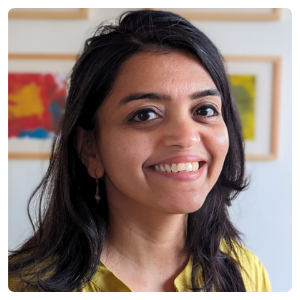
Aditi Wagh is a Research Scientist in the STEP lab at MIT. She has a PhD in Learning Sciences from Northwestern University. Dr. Wagh has over 15 years of experience in designing and studying CT-integrated science and math education for K-12 classrooms. In the MSM project at MIT, Dr. Wagh studies how CT practices link math and science learning in 6th grade classrooms. She has two other ongoing NSF projects: From Access to Sustainability: Investigating Ways to Foster Sustainable Use of Computational Modeling in K-12 Science Classrooms integrates data and modeling practices in middle school classrooms to engage students and teachers in modeling and making sense of the world. Choreographing Science: Youth, Scientists & Choreographers Co-constructing Meaning through Choreography & Agent-based Modeling” seeks to examine the impact of having youth, choreographers, and scientists engage in the collaborative embodied exploration of complex scientific systems and phenomena.
Lauren Vogelstein, Co-PI

Lauren designs and studies STEAM learning environments where the A in STEAM is as respected as the STEM disciplines involved. In particular, she explores how collaborating with dancers and choreographers on the design and analysis of STEAM spaces can leverage artistic, choreographic research as rigorous forms of collective learning.
Currently, Lauren is an assistant professor of Technology, Media, & Learning at Teachers College, Columbia University. Prior to that she was a visiting assistant professor in the Dance Education doctoral program at Teachers College and completed postdoctoral fellowships at the University of Pennsylvania (mentored by Drs. Yasmin Kafai & Danae Metaxa) and NYU (mentored by Drs. Jasmine Ma & Christopher Hoadley). She received her PhD in Learning & Design from Vanderbilt University (mentored by Drs. Rogers Hall & Corey Brady) and her BFA in Dance & Choreography from the Ailey/Fordham program (mentored by Kazuko Hirabayashi).
Rebecca Steinberg, Design Team
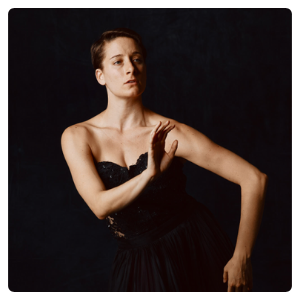
Rebecca Steinberg (she/her) is a dance artist and scholar. She is a 2021 Tennessee Individual Artists Fellow and a 2019 Jacob’s Pillow Choreography Fellow. Steinberg’s interdisciplinary research projects bridge dance studies, learning sciences, queer studies, and gender and sexuality studies. For nearly a decade, she has collaborated closely with Learning Scientist Dr. Lauren Vogelstein on the design and analysis of STEAM learning environments as sites for rigorous collective learning and choreographic research. Her current STEAM research is supported by a three-year National Science Foundation AISL grant examining the impact of engaging youth, choreographers, and scientists in collaborative, embodied exploration of complex scientific systems and phenomena. Steinberg’s primary research and teaching interests include dance studies, queer studies, performance studies, gender and sexuality studies, black feminist theory, design thinking, and dance education. Rebecca earned her MFA in Dance from the University of Maryland, College Park where she is currently pursuing a PhD in Theatre and Performance Studies.
Curtis Thomas, Design Team
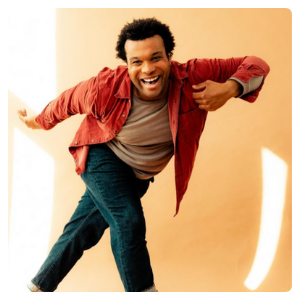
Curtis Thomas is a performer, educator, and creative consultant originally from New Orleans. With a performing career that has spanned both concert dance and theater, he has worked with artists such as Camille A. Brown, Banning Bouldin, David Dorfman, and Kayla Farrish as well as in the cast and creative team of the hit musical Waitress. Curtis also performs at the Metropolitan Opera where he has been in productions of Carmen, Fire Shut Up In My Bones and Aida. Curtis is a creative and curricular consultant working with data scientists, choreographers, and learners of all ages to bring embodied learning practices to a variety of spaces both in and beyond the classroom.
Lara Appleby, Design Team
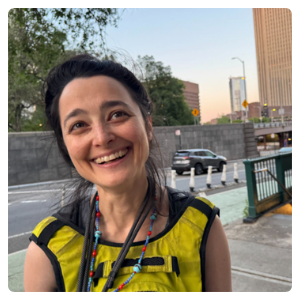
Lara Appleby has worked in STEM education, research, and teacher learning. She cares about how people experience learning and teaching. She completed a Ph.D. in Biology, a Masters in Genetics, and a postdoc in STEM Education. She has experience running professional development for instructors and managing grant-funded academic projects.
For this project, Lara helped shape the cards, the professional development for the scientists, and the camps. She looked to support agency for young people and listening from scientists, and exchange amongst everyone. Lara enjoys dance and embodiment and brought that spirit into the work. Across her work, Lara values curiosity, growth, and connection.
Annie Shan, High School Research Intern

Hi, I’m Annie Shan, a high school student from Brooklyn, New York, and the founder of Mindset Math, a youth-led nonprofit organization innovating STEM education through creative, research-based curriculum design and after-school programming. I enjoy teaching younger students and collaborating with peers on projects that reimagine what learning can be.
Alongside this work, I have a deep personal interest in dance. I’ve learned swing dance and participated in after-school dance classes, and I see strong connections between rhythm, movement, and how students engage with learning. I’ve also experimented with kinesthetic approaches in teaching—for example, using floor mats to let students jump through different thought processes in math or biology problems. These experiences inspire me to think about how creativity and embodiment can transform education. In the future, I aspire to study cognitive science or psychology and pursue a career in teaching and educational entrepreneurship.
Jen Turey Draghi, Doctoral Student Research Assistant

Jen Turey Draghi is currently an adjunct professor at Manhattanville University and adjunct professor/choreographer at Western Connecticut State University where she also serves on the marketing committee for the HPX department and as the faculty advisor of the dance clubs, Eversion and Shuffle. She is on faculty at Broadway Dance Center, at Burklyn Ballet Theatre, and teaches regularly in the tri state area. Turey’s professional experience includes the Radio City Music Hall Christmas Spectacular as a Rockette, the Broadway tours of 42nd Street, Crazy for You, and The Will Rogers Follies and at regional theatres. Her choreography career has taken her to Weston Playhouse, Merry-Go-Round Playhouse, The Reagle Players, Richter Park, and off-off Broadway at ATA. Jen Turey Draghi is an Ed.D. Dance Education Program student at Teachers College, where she pursues the Interdisciplinary specialization. Her research interests include higher education curriculum, the preservation of tap dance history, and exploring dance as an interdisciplinary art form.
Collaborators
Xan Burley & Alex Springer, Choreographers

XAN BURLEY + ALEX SPRINGER are dance artists, performers, and teachers currently working as assistant professors of contemporary dance practice at the University of Florida. From 2007-2018 they were based in New York City performing with Doug Varone and Dancers extensively and have been grateful to work on projects with Alexandra Beller, Jeanine Durning, Shannon Gillen, Angie Hauser, Heidi Henderson, Donnell Oakley, and Tami Stronach, among others. Together, they co-direct Every Body Meeting (EBM), an interdisciplinary collective co-creating at the intersection of choreography, sound, sculpture, film, media art, and community-engaged performance. Their projects have been presented by venues such as Movement Research at the Judson Church, Danspace Project’s DraftWork series, New Dance Alliance Performance Mix Festival, Center for Performance Research, School for Contemporary Dance and Thought, and the American Dance Festival, among others. Artist residencies and research fellowships through the Marble House Project, University Settlement, Center for Performance Research, and Jacob’s Pillow, among others, have supported and nurtured their creative process. From July 2024 to September 2025, they were commissioned to create three new performance projects and exhibitions in Taipei, Taiwan through AIR Taipei’s Treasure Hill Artist Village. Their choreography has been commissioned by over fifteen university programs and repertory companies. With Dr. Elif Akçalı (UF Industrial & Systems Engineering), Burley and Springer co-authored a feature article in the Journal of Dance Education applying systems engineering frameworks to dance composition. They have also contributed to NSF-funded projects that advance cross-disciplinary inquiry between dance and STEM fields. Burley and Springer have enjoyed teaching at the Bates Dance Festival, Gibney, freeskewl, SUNY Purchase, the University of Maryland, Smith College, and Wesleyan University
Eleana Manousiouthakis, PhD, Biomedical Engineering, UF Breathing Research and Therapeutics Center

As a postdoctoral researcher at the University of Florida, Eleana studied the cellular microenvironment and the impact extracellular matrix changes on tissue repair and function. She used 3D printing technologies (e.g., soft matter bioprinting in liquid-like solids) and naturally derived polymers, such as hyaluronic acid, with tunable mechanical properties to create tissue engineered constructs to study the special and temporal changes that occur in the extracellular matrix in acute and chronic spinal cord injury. Eleana was a Scientist Fellow in the Dance to Explore Science Camp in Gainesville in 2022. Her work with youth and choreographers shifted her perspective and raised new questions for her about her research.
Matthew Terza, Ph.D., Biomechanics, Instructional Associate Professor, Applied Physiology and Kinesiology, University of Florida

Matt is an expert in biomechanics applied to exercise and sport, passive marker-based motion capture instrumentation, motor control theory with a view to complex dynamical systems, and normal and abnormal gait mechanics. He engages students through embodiment and applied analysis of human movement. Matt participated as a Scientist Fellow in the Dance to Explore Science Camp in Gainesville in 2022. Prompted by one youth’s suggestion to consider the relationship between human bodies and marionettes, Matt began an exploration of joint movement. The activities of the camp led him to a new focused attention on the joints of the leg and new ideas about how to introduce biomechanics into his undergraduate science courses using physical artifacts.
“A lot of my interest is in just the variability that we have in the way that we move to achieve the same goal. This [camp] has been really interesting for me to put these embodied choreographic experiences in conversation with the NetLogo. So, one of the things that came up really early on in our conversations was the difference in human movement versus kind of robot or pre-programmed movement – where robots can really only do the thing that you tell them to do, where us, genuine human movement has choice and this intrinsic variability to it. And looking at that in NetLogo, that predetermined programmed movement versus some genuine human movement and putting them side by side has a lot of interesting things there.”
Megan Butala, Ph.D. Materials Science Engineering, Assistant Professor, University of Florida

Megan, a materials science engineer and a dancer, participated as a Scientist Fellow in the Dance to Learn Science Summer Camp in Gainesville, Florida in 2023. Megan studies the fundamental relationships between atomic structure, composition, and properties, especially of inorganic materials for energy storage and electronic appliance. Her work explores promising alternatives to today’s lithium ion batteries, which could reduce reliance on scarce and problematic materials like cobalt and nickel. She is a recent recipient of an NSF CAREER Award to establish new understanding and chemical principles that impact structure and functional properties in compositionally-complex oxides. She is also using dance/choreography to investigate these materials and for public outreach about science topics. Her work with youth in the Dance to Explore Science Camp allowed to gain a new perspective on movement as a way to engage in her research.
“I saw the benefits of dance as a science education tool firsthand in June 2023 as a Science Fellow in a project studying embodiment and coding as learning tools. I worked with learning researchers, choreographers, other Science Fellows, and middle-school youth to explore science concepts through embodiment and conversation. I saw youth quickly gain understanding of bonding and ionic diffusion, and identify insightful questions that built upon their understanding. I expect this the of approach will help new researchers more than typical approaches, such as passively listening to senior researchers’ explanations and reading papers alone.”
James Liao, Ph.D., Biology, Professor, Whitney Laboratory for Marine Science, University of Florida

James is a Biologist and Neurobiologist. His research looks at how zebrafish can recycle the energy of turbulent flows in water to save swimming energy and the organization and function of neurons in the flow-detecting lateral line hair cell system in fish. His work studying the healthy nervous systems of zebrafish can help to understand more-complicated human disorders and can ultimately contribute to treatments for certain hearing disorders. James brought his research to youth in the Dance to Explore Science Camp as Scientist Fellow in Gainesville in 2023. His work with youth and choreographers shifted his perspective on zebrafish.
“I’m getting the appreciation that when groups of people, or animals, or fish, or whatever come together there are little groups within that. You can’t just treat everything equally and I think almost every single scientist who works in my field is thinking of them kind of equally at first and then seeing what’s happening. But maybe you should start out with thinking that there’s like a fifth, affinity groups that maybe we can’t measure right off the bat now and just maybe what that does to thinking about that.”
Cristina Schlesier, PhD, Physics, Lecturer, Cornell University

Cristina Schlesier is a Lecturer in Physics at Cornell University. She earned her PhD in Physics from the University of Illinois at Urbana-Champaign in 2021 and her BS in Physics & Mathematics from Fordham University in 2013. Her research on particle physics asks the question: What happens when we loosen the requirement of locality (principle that an object is only influenced by its immediate surroundings)? Do any other constraints emerge?
Purva Joshi, PhD, Mechanical Engineering, Harvard Medical School and Massachusetts General Hospital
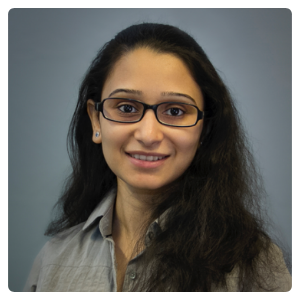
Purva is a mechanical engineer with a background in thermal sciences, computation, engineering modeling, and cryopreservation. As a postdoctoral researcher, Purva’s work spans two major areas: the development of enabling technologies and advanced microscopy methods to support cryopreservation, and the formulation of cryopreservation protocols for complex biospecimens. She is currently developing and optimizing preservation strategies for Anopheles mosquito and Drosophila embryos. Purva was a Scientist Fellow at the Dance to Explore Science Camp in Boston in 2023.
“It was a very interesting experience, because, you know, you know, like thinking I never thought of until now. I never thought of my science in terms of dance like I didn’t know like they can even be connected. It just didn’t fit in my head, like, you know, there were 2 different spaces, but it was interesting to see how easily they fit together. I think there would be a a lot of students that could benefit with this approach.”
MK Ford, Visual Artist
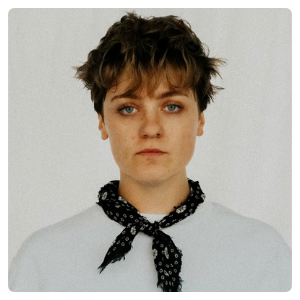
MK Ford’s work orbits the radical terrain of embodiment, interdependence, and transformation. Rooted in queerness, mutual aid, and collective futurity, I explore how performance—especially dance—can be both a strategy and a shelter, a transmission system for personal and political urgency. Fueled by themes of code shifting, grief, digital humanities, cyborg mythologies, and the bittersweet iconography of gay cowboys crooning at the moon, my practice insists on the tenderness of direct action and the necessity of storytelling.
I work across dance, film, animation, and visual art—each medium offering its own dimensional language. In dance, I engage contemporary forms, floorwork, partnered improvisation, and street style foundations to blur the boundaries between artifice and artifact, fantasy and memory. Dance is where abstraction becomes a place to rehearse liberation. It’s where we agree, if only briefly, that viewership is positional, spectacle is embodied, and the body in motion is a high-stakes archive—simultaneously haunted and hopeful.
Ford is currently a Professor of Dance and Media at Arizona State University and holds a MFA from the University of Maryland and a BFA from the University of Illinois at Urbana-Champaign.
Kimberly Descoteaux, Project Manager

As a seasoned Project Manager, Kim Descoteaux has led multiple high-profile NSF-funded initiatives at TERC. Much of her work has focused on creating and maintaining electronic learning communities. Her current portfolio includes managing the Communities of Practice for the REVISE Center (NSF #2229061), as well as providing project management support for AugmentedEF (NSF #2202291) and Choreographing Science (NSF #2115773).
Advisors
Dr. Lekelia “Kiki” Jenkins
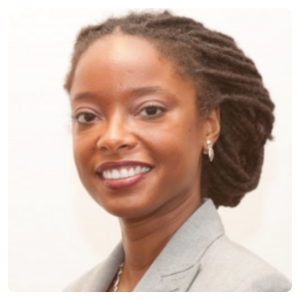
Dr. Jenkins is an awarding marine sustainability scientist and science dance choreographer. Her work has led to more sustainable fisheries practices and ocean uses.
Dr. Jenkins also studies and practices science dance as a means of science engagement, science communication, and social change. As a dancer and choreographer as well as research scientist, Dr. Jenkins is interested in the intersection of science and dance as a tool for conveying research results and engaging the community in projects.Among her many accolades and awards, she received an Alfred P. Sloan Research Fellowship in Ocean Sciences and is a member of the National Academies of Sciences Ocean Studies Board. For her accomplishments as a scientist and role model for women and girls in STEM, she was honoured with a life-sized statue that was exhibited in the National Museum of Natural History’s Sant Ocean Hall.
Corey Brady

Corey is an Associate Professor of Mathematics Education and the Learning Sciences and director of SMU’s Technology-Enhanced Immersive Learning (TEIL) cluster. His research focuses on mathematical and computational modeling, with a particular emphasis on supporting and understanding the collective learning of classroom groups. He approaches computational thinking and learning from a constructionist perspective, and he engages in design-based research to support and understand new forms of STEAM activity.
Beth Warren

Dr. Beth Warren is the Sylvia Earl Professor and director of the Earl Center for Learning & Innovation. She is also a professor in the department of Language & Literacy Education. Dr. Warren’s research imagines possibilities for learning and teaching beyond the settled forms of schooling that have failed too many of our children and youth, especially those from historically marginalized communities. Her research builds from the heterogeneity of human cultural practices to design educational ecologies that cultivate justice, dignity, and mutual flourishing. Working in partnership with teachers, youth, scientists, and artists, Dr. Warren and her colleagues investigate questions at the intersection of culture, language, race, learning and teaching across STEM, humanities, and arts disciplines. They also explore designs for teacher learning that work at disrupting and transforming power in moment-to-moment classroom interaction in ways that sustain multiple values, purposes, and arcs of human learning.
Elif Akcali
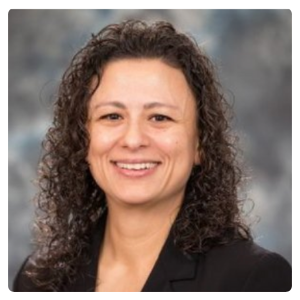
Elif Akcali serves as an associate professor of industrial and systems engineering at the University of Florida. She is in the inaugural class of UF Entrepreneurship Faculty Fellows in the Center for Entrepreneurship & Innovation in Warrington College of Business Administration. She is a Creative Scholar-in-Residence in the School of Theater + Dance. Her research and teaching interests are inventory and supply chain systems, lean production systems, sustainability and creativity.